What Do I Desire?

watts-wisdomofinsecuritycoverAlan Watts was the Joyous Cosmologist, as the title of a book he wrote claimed. He was a major philosophical figure in the 50s and 60s, the writer of many books, and a popularizer of Asian religions and philosophies.

Here he gives a Ted Talk that long predates Ted, and gets to one of the key questions about life. He does it artfully, uses the word retch in a memorable phrase, and you can listen here.

Health Care in France: Not perfect, but. . . .

A first person account of the expensive French health-care system, which seems to work exactly the way Medicare works, only better because it is bigger.

The key points:

  • Everyone gets basic care as part of the package they pay for with taxes.
    Above a certain level of coverage, people pay for extra insurance to suit their situations.
    Employers sometimes provide this secondary level of coverage.
    Care is rationed so the system can sustain itself, but care is privileged according to urgency of need.
    Care is designed to more efficiently and effective use facilities, lowering cost.
    Patients must be told the cost, in advance, of all procedures that cost more than 70 euros.
    All costs are transparent.
    The French spend a lot of their GDP on caring for the society, including health care.
  • This seems so much smarter than allowing insurance companies into the part of a process in which we all implicitly share the risk. That is, the overall health costs from cradle to grave of everyone is known. We don’t know how the costs will be distributed to each family and each individual, but we know the total, which is why we spread the risk. The collective cost of the total, or rather our slice of it, should be our individual cost.

    Insurance companies know this. But they provide a service that adds little to no value to the process, and increases the cost. They make a profit, which is an additional tax we pay, and for what?

    How do we know that they increase costs without adding value? Medicare delivers similar services and costs much less.

    I’m sure that things aren’t always perfect in the French health-care system, bring your own towels, but doesn’t it make sense to craft a system that carves out wasteful players and improves our understanding of our individual health needs can be addressed with quality and at the lowest cost?

    Novel: Tao Lin, “Taipei”

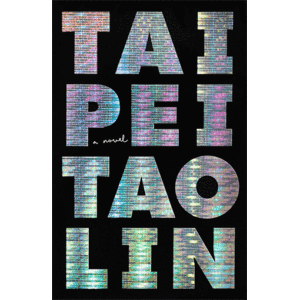
    Taipei_510x510 A lot of people think that in his 2013 novel, Taipei, Tao Lin has written a great novel about contemporary life and love.

    I read his earlier short novel, Richard Yates, last summer, and enjoyed it. He has a style that is hyperselfconscious. His narrator in Taipei, Paul, is a novelist, and is continually aware of what is said, the context in which it was said, what was heard and the context in which it was heard. He evaluates each said thing and every expression and act based on all of it. Paul can be as tiresome as you might imagine.

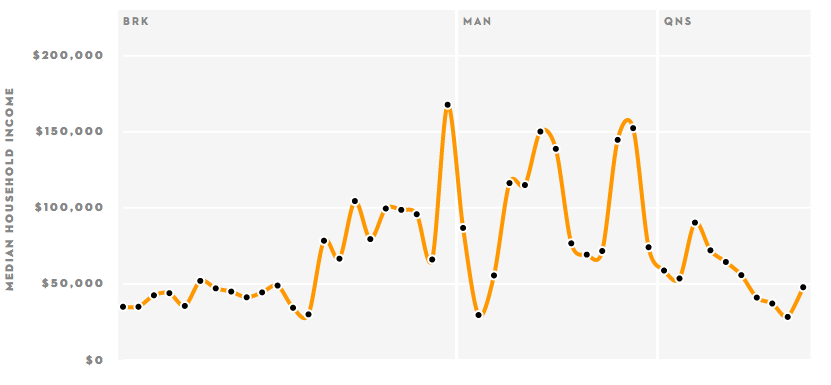
    Paul grew up in the US, but his parents were from Taiwan and have moved back there. They like it when he visits, which he does a couple of times in the novel. But mostly he lives in Williamsburg, Brooklyn, in 2010 or so. He’s interested in meeting girls, he’s recently broken up painfully, and his next few months will be spent on a book tour across America to support his most recent work (not clear whether it is poetry or a novel), and obliterating all sense of memory, so that all he has left is the memory of what happened in the last few moments. A quote from page 75:

    Having repeatedly learned from literature, poetry, philosophy, popular culture, his own experiences, most movies he’d seen, especially ones he’d liked, that it was desirable to “live in the present,” “not dwell in the past,” etc., he mostly viewed these new obstacles (note: the long list of drugs he takes regularly) to his memory as friendly and, sometimes, momentarily believing in their viability as a form of Zen, exciting or at least interesting. Whenever he wanted to access his memory (usually to analyze or calmly replay a troubling or pleasant social interaction) and sensed the impasse, which he almost always did, to some degree, or that his memory was currently missing, as was increasingly the case, he would allow himself to stop wanting, with an ease, not unlike dropping a leaf or a stick while outdoors, he hadn’t felt before—and, partly because he’d quickly forget what he’d wanted, with a sensation of loss or worry, only an acknowledgment of a different distribution of consciousness than if he’d focused on assembling and sustaining memory—and passively continue with his ongoing sensory perception of concrete reality.

    So, he’s kind of like the hero of Memento, except the obliteration of memory is self-inflicted, a way to escape the self consciousness he’s always felt and which he feels has robbed him in his life experiences.

    At the same time, he’s brutally relentless in his self-examination of the moment, something his young girlfriend Erin feels from his ongoing descriptions of what is going on between them, from the perspective of most of the other players, and from himself. Paul is a proxy for Tao Lin, and he’s sometimes charmingly clever and often irritatingly self-involved. He is also very plain spoken and engaging, and the Russian dolls he unboxes page after page are sometimes comic, other times tedious, but his is a third person voice that is as immediate as the first person.

    There is also quite a bit of apparent social content in Taipei. The characters are modern consumers of video, internet bandwidth and healthy foods (and guilt-out when they have to eat something that doesn’t meet their standards). Lin seems to be something of a critic of the consumer culture, or the way modern communications have fragmented us, but just as often the electronics are something more positive. The subtle satire is more the reader’s voice using Lin’s observations as evidence. Lin seems more a psychorealist in his intentions than a social critic.

    Paul, Erin and their friends take Thompsonian (or Burroughsian) amounts of drugs, all the time, with very little worry about the mechanics of this desire. They call, the drugs arrive, for the most part, or are just there. There is hardly any concern about money, they never wait for the man, the context is not realistic but more like an extended dream of living a quasi-adult life with the emotional immediacy of a third grader. Paul also never talks about the history of writers who preceded him who have built personas or books off of drug use. Given the richness of reference, it is an odd omission.

    Taipei is something of a schematic, a drawing board philosophical inquiry into the manner of memory obliteration, existential drug-fueled YouTube creation and love without the ability to express anything soft. Perhaps most curious is a passage in which Paul declares that his favorite novelist is Ann Beattie, and also Tao Lin’s (I subsequently read in an interview with Lin, who also listed Bret Easton Ellis among his favorite favorite writers). Paul’s favorite novel, he says, is Chilly Scenes of Winter. Remembering Beattie’s plainly declarative writing, I return to the Chilly Winter of those young lives trying to connect in another time of social upheaval, which doesn’t feel at all like Taipei on a superficial level, but once you get past the writer’s style makes them feel quite similar indeed.

    Taipei is far from a great novel, but it is ambitious and idiosyncratic and often good fun. I like that sort of thing.



    Link: Addicted To Wealth

    A young man who earned his way into insider status in the financial industry, compares the compulsion to acquiring money as an analog to other addictions, an attempt to compensate for or avoid some other deeper pain inside.

    It’s a cool story, but I doubt it is universally true. But there is something else he realized as his eyes opened that is certainly true:

    I’d always looked enviously at the people who earned more than I did; now, for the first time, I was embarrassed for them, and for me. I made in a single year more than my mom made her whole life. I knew that wasn’t fair; that wasn’t right. Yes, I was sharp, good with numbers. I had marketable talents. But in the end I didn’t really do anything. I was a derivatives trader, and it occurred to me the world would hardly change at all if credit derivatives ceased to exist. Not so nurse practitioners. What had seemed normal now seemed deeply distorted.

    We need banks and investors, as a way to pay for real things, but the notion that credit “products” like credit default swaps are anything more than a way for the sharps to skim their percentage off the world economy is a sham.

    I’m not qualified to know where to draw the line here, but I’m sure that one great injustice we can all line up behind is the fact that income derived from this mostly-worthless churning of money should be taxed at the same rate as income that is earned by labor. At least.  It should certainly not be taxed at a lower rate, as it is now.

    Movies: Philomena, starring Steve Coogan and Judi Dench

    philomenaposterCoogan is the executive producer, co-star and co-writer of this adaptation of a true story. I had no expectations going in, but very much enjoyed Tristam Shandy and The Trip, both of which starred Coogan. Stephen Frears has made some excellent movies in his now long career. And Judi Dench is always powerful and charming.

    The odd bit here, the story of an older woman’s search for the son she bore in a nunnery out of wedlock, who was given up for adoption 50 years earlier against her wishes, is Coogan’s decision to frame the story as a mashup of an odd couple road movie (think Rain Man) and an expose of the sordid workings of the Catholic Church (think The Magdalene Sisters). As such we bounce from fish out of water comedy to fervid religious angst, all of it nicely acted and perfectly presentable, all of it without any frisson at all until the actual facts of the case start coming a little clearer.

    Then, it is our imaginations that are required to connect the dots. The movie does very little heavy lifting, it seems content to rest on the formidable talents of its stars, who pull if off if you don’t ask too much or think about it too hard.

    Astronomy Wiz Falls Down a Wormhole.

    I enjoy Phil Plait’s Bad Astronomy posts that I read on Slate. I’m sure his Bad Astronomy blog is well worth visiting, but I hadn’t until tonight. And I have to say, I love the handmade feel of the site. And I love his enthusiasm for the deep space photos and the climate change fight, and even mathematics.

    Which is where this story comes from. Yesterday Phil wrote a story about a mathematical equation that defied description. It’s kind of like the idea, If God can do anything, can he make a rock he can’t pick up? In this case the question was, what is the sum of 1+2+3+4+5….

    Those ellipses mean that the sequence goes on forever. It’s a headpounder. If the sequence of numbers is infinite, it seems like the sum of this infinite sequence must be infinite, but Phil told a story in which the sum was -1/12th.

    And he posted a video. In which some giggly physicists, highly respected apparently, demonstrate by a series of algebraic transpositions (I’m certainly not using the right math lingo here) that the infinite (which Phil identifies as divergent) series has that value of -1/12th.

    I watched the video in the original post and I liked the kookiness, and I loved the way math was a form of play (not something I have any familiarity with), but I didn’t understand how you could just add and subtract these infinite series and make any sense. It all seemed somewhat arbitrary. Despite Phil’s hype of this explanation as mindblowing, my mind was unblown. Good for me, it turns out.

    According to Phil’s mea culpa today, you really can’t add and subtract infinite series. Phil got gulled into a bit of pop-math hocus pocus, I guess. He doesn’t call out the guys in the video. But his elaboration on the original post is good-writer magic, and explains why his blog is popular.

    I think the bigger issue here is our need to question what we see and hear. Phil Plait is a thoughtful and honest writer with a lot of expertise. He notes that that expertise is not mathematical, but he does love the numbers, so he writes about them. That doesn’t mean he or his source is always right. We need to be skeptical about all claims, especially the mindblowing ones.

    And welcome when someone who made a mistake admits it. As Phil did.

    New Sherlocks Start Tomorrow! Yawn.

    what-calm-i-m-waiting-for-sherlock-season-3-6But not for the reason you think. My daughter was so excited by the prospect of new episodes of Sherlock that I hooked up Tunnelbear to my internet connection. Tunnelbear is VPN software that anonymizes your data stream, so you can watch local content from other countries. So we streamed Sherlock from the BBC1 website in the UK, just as if we were holed up in our seaside cottage in Port Wen in Cornwall, eating pasties.

    Tunnelbear works great, and it also encrypts all your data, so you can’t be tapped by evil doers in public wifi hotspots and the NSA everywhere. At least in theory. They gift you with 500mb of data per month, and if you Tweet their praises @thetunnelbear they’ll give you another GB, which combined is enough for more than an hour of TV watching a month from England or France or a few other countries they have servers. For $5 a month or $50 per year you can use the service as much as you like. This advertisement generates no remuneration, it is just an expression of amazement and enthusiasm.

    With a one-month subscription our little one and her little friend have seen the whole season of the gangly detective and his very nice sidekick, already, and won’t be troubled by the late night scheduling on a school night during mid-term time that caused so much consternation last time. No spoilers, but I’m told episode 2 is just the best Sherlock ever.