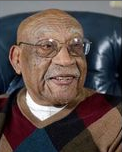
Inside Garbage Land!

CNN’s “Inside Man,” Morgan Spurlock, goes deep inside the world of garbage tonight on CNN. Here’s a story about his report.

Spurlock does all the things a good and enterprising reporter might do. He follows his trash from house to truck, then to the transfer station, and on to the dump. He investigates what happens to all the plastic in the ocean. He works a shift with his local Department of Sanitation workers, looks at a recycling MRF, explores electronic waste issues, and even talks to members of the zero-waste movement. Though there is no indication he visits a Prolerizer, which is something I would like to see, these are all fine topics for discussion.
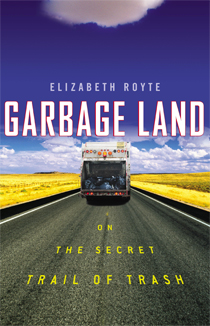
garbagelandcoverAnd they were all covered extensively by my wife, Elizabeth Royte, in her 2005 NY Times Notable Book, Garbage Land: On the Secret Trail of Trash. Visit Garbage Land’s website here.

Spurlock was an enterprising documentarian while making Super Size Me, about eating McDonalds only, and POM Presents: The Greatest Movie Ever Sold, about product placement, and has made many other films and TV shows, including one about One Direction, so he’s likely to do a fine job on the same story in a different medium. We’ll see.

Elizabeth is philosophical. One can’t own a topic, of course. Still it’s hard to read through the list of topics in Spurlock’s show and the reportorial approach and not think of recycling.

IN THE NEWS: Red Hook’s Maraschino Cherry Factory

redhook-cherries-doorAt some point, years ago, we learned that the largest maraschino cherry factory in the US was located in Red Hook, Brooklyn. Always interested in factory tours and local food (this last said with a grin), and often in the neighborhood for bike rides and social events, we searched out the place, hoping to get a look at all the bright red cherries.

But a phone, Google Maps and a search turned up nothing but a plain brick building without identifying markings. We talked about knocking and seeing if we could get an informal tour, Red Hook seems friendly that way, but didn’t. The factory just didn’t feel open in that way.

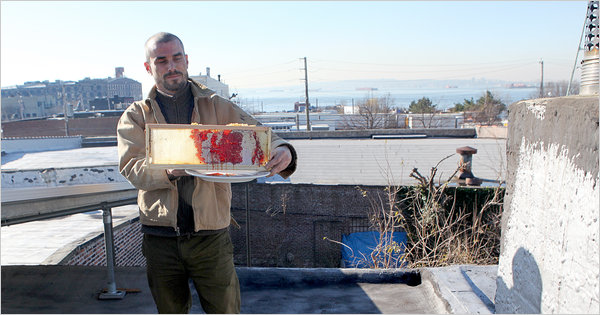
red-honey-from-beesSome time later, apparently 2010, Dell’s Maraschino Cherry factory was again in the news. Beekeepers in Red Hook found that their bees were making a red concoction rather than their natural honey. The source of the red? The dyed corn syrup in which the cherries are marinated as part of their processing.

Unsurprisingly, bees like sweets! Arthur Mondella, who owned Dell’s (and whose family started the company in the 20s), agreed to take measures to contain his sweet detritus and prevent the bees from getting to it.

A funny story, it seemed, with a happy resolution, until earlier this week, nearly five years later, investigators from the Department of Environmental Protection and the Department of Environmental Conservation, as well as the Brooklyn district attorney’s office, showed up at the Dell’s factory with a search warrant for documents relating to charges that the company was dumping in the local waters.

Some dicey constructions, the smell of marijuana, and another search warrant led to a surprising discovery and a cascading tragedy you can read about here.

The Horror

I’m a great fan of Ben Fountain’s novel, “Billy Lynn’s Long Halftime Walk,” which Matt Richtel writes about in this piece about recent vets of the US’s foreign wars and their discomfort with being thanked for their service.

Richtel’s story is a reminder that our government gave up on a conscripted army after the Viet Nam war because it was an inefficient and politically troublesome way to wage war, especially unpopular wars that go on for a long time. Something our military seems to be very good at.

And our volunteer veterans are the citizens who face the consequences of this perpetual war, including deployment and redeployment, life and death risk, debilitating injury, and the prospect of facing a lifetime being reminded that service ends up being a democratic dividing line rather than an adhesive.

Richtel makes this point more lucidly than I ever could by telling the story of a hand shake, and what came after.

Ta-Nehisi Coates about David Carr

Screenshot 2015-02-20 09.22.49David Carr, who died last week, was a writer about media at the New York Times in recent years, which is a highly visible beat, but before that he had a colorful life as a journalist and editor and knucklehead and fuckup. Ta-Nehisi Coates met Carr when Coates was a knucklehead and Carr was an editor, an editor who hired him and who made a profound difference in the young man’s life. In this tribute Coates explains why, and also explains something deep and abiding about growing up and becoming a writer, explains the power of David Carr’s vision of journalism and reporting, and gives the George Polk award he won this week for his powerful  reported story, The Case For Reparations, to Carr in honor of all his former editor taught and gave him. Beautiful.

LINK: Joe Posnanski on Charlie Sifford, Who Died Yesterday

Screenshot 2015-02-05 08.38.36Charlie Sifford was a black golfer at a time when the PGA, the Professional Golfer’s Association of America, had in its by-laws a clause that specified that only white golfers could play in PGA tournaments.

This was a long time ago, but it was within my lifetime, and long after the ban was lifted Sifford could not get invited to the Masters tournament, because it was played at a golf club that did not allow people of color to play.

This Joe Posnanski story is about trying to write a column about Sifford and Augusta National in the early 90s(!!!), and having the story spiked (possibly? probably?) because it was critical of the club. Heck, Augusta National didn’t allow a black man to play in the Masters until 1990, under what at that point was intense pressure.

Charlie Sifford’s autobiography is called, Just Let Me Play: The Story of Charlie Sifford, the First Black Pga Golfer, and seems to cost more than $2,000 today. Posnanski’s story is a shorter and cheaper way to raise some bile and remember just how slowly change comes unless we work at it.

LINK: A Modern Library

Screenshot 2015-02-01 09.33.29 The Internet Archive is one of the most spellbinding places online. To visit is to get lost in the world wide web’s past, or to revisit a concert one was at 30 years ago, or more recently (for me) to play Lemmings again for the first time since the early 90s. You might call that a waste of time, or you might call it a reminder that we march on, leaving our past behind. Which isn’t always to the good.

Playing games is the cookie that lures you into IA’s new operating system in a browser emulator, but Andy Baio explains in this article that the main dish (pardon the metaphor) is the ability to access and utilize all that data that have been lost as these old operating systems became outmoded. If you can get the files off the floppy disks.